Introduction
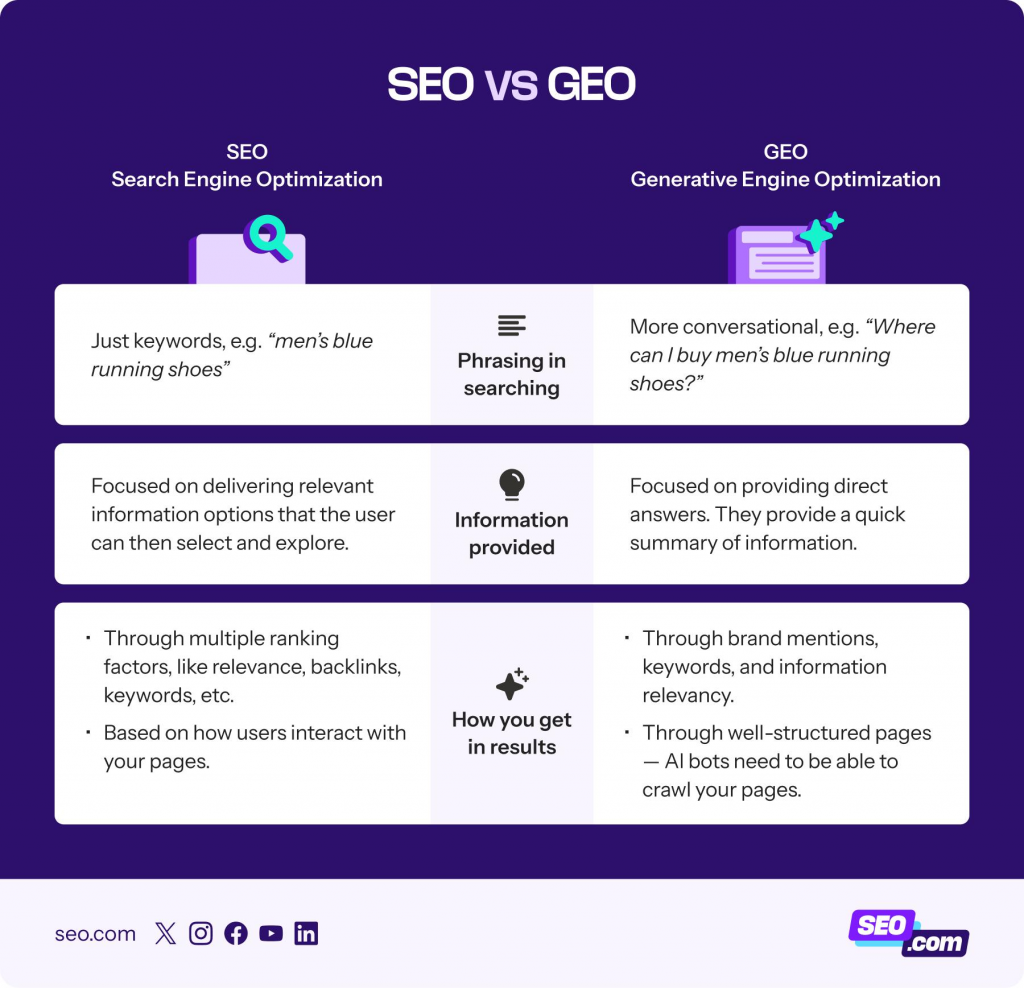
Many businesses still assume SEO and GEO are the same thing.
They are connected, but they are not identical.
Traditional SEO focuses on helping your website rank inside search engines like Google and Bing.
GEO, or Generative Engine Optimization, focuses on helping your content appear inside AI-generated answers from platforms like ChatGPT, Google Gemini, and Perplexity.
This difference matters because search behavior has changed.
People no longer search only with short phrases like:
“best SEO agency Michigan”
Now they ask:
“Who is the most trusted SEO expert in Michigan for small business growth?”
That is a GEO-style search.
AI systems respond by pulling answers from trusted, well-structured, high-authority content.
This means businesses must optimize for both.
Ignoring GEO today is like ignoring SEO ten years ago.
The businesses that understand both early will have the biggest advantage.
What Traditional SEO Means
SEO stands for Search Engine Optimization.
Its goal is simple:
Help your website rank higher in traditional search results.
This includes:
- keyword research
- backlinks
- on-page optimization
- technical SEO
- internal linking
- mobile optimization
- page speed
- user experience
Traditional SEO helps drive:
- organic traffic
- lead generation
- phone calls
- appointments
- product sales
Good SEO makes your business discoverable.
Without it, even great businesses stay invisible.
What GEO Means
GEO stands for Generative Engine Optimization.
It focuses on helping your content get surfaced inside AI-generated responses.
For example, if someone asks ChatGPT:
“What are the best local SEO strategies for Michigan businesses?”
The AI system looks for trusted content sources to help generate that answer.
That means GEO depends heavily on:
- authority n- trust
- content clarity
- structured formatting
- strong entity recognition
- FAQ optimization
- helpful people-first writing
Instead of only ranking on page one, GEO helps your content become the source AI references.
That visibility is becoming extremely valuable.
Quick Comparison Table
| Traditional SEO | GEO |
|---|---|
| Focuses on search engine rankings | Focuses on AI-generated visibility |
| Targets SERP clicks | Targets AI answer inclusion |
| Backlinks are critical | Trust and clarity are critical |
| Keyword-heavy strategy | Authority-heavy strategy |
| Google and Bing results | ChatGPT, Gemini, Perplexity |
Both strategies work together.
One should not replace the other.
Why Businesses Need Both
Some marketers ask:
“Should I focus on SEO or GEO?”
The real answer is both.
Traditional SEO drives direct traffic.
GEO builds authority and future-proof visibility.
Many users now complete searches without clicking websites.
This is called zero-click search.
That means visibility itself becomes the win.
If your business is recommended by AI, trust grows even before the user visits your website.
That trust influences buying decisions.
Businesses that only optimize for old search behavior will slowly fall behind.
How to Optimize for Traditional SEO
Strong traditional SEO still matters deeply.
Best Practices Include:
- targeting search intent first
- using long-tail keywords
- building quality backlinks
- improving page speed
- strong title tags and meta descriptions
- internal linking
- mobile-first design
- structured content
- optimized images
- technical SEO monitoring
Tools like Google Search Console and Google Analytics help track these improvements.
SEO is still the foundation.
How to Optimize for GEO
GEO requires a slightly different mindset.
Instead of asking:
“How do I rank this page?”
ask:
“How do I make this page the best answer online?”
GEO Best Practices Include:
- clear direct answers
- FAQ sections
- comparison tables
- entity-based writing
- expert examples
- strong E-E-A-T signals
- trusted citations
- educational blog content
- location-specific authority
AI tools reward clarity.
Vague websites rarely get referenced.
Trusted content wins.
Entity-Based Writing Matters
Entities help search engines understand context.
Examples include:
- Semrush
- Ahrefs
- Moz
- Michigan
- University of Michigan
When your content references real entities, AI systems better understand relevance and authority.
This improves GEO performance.
Entity SEO is becoming one of the most important hidden ranking factors.
Content Structure for GEO Success
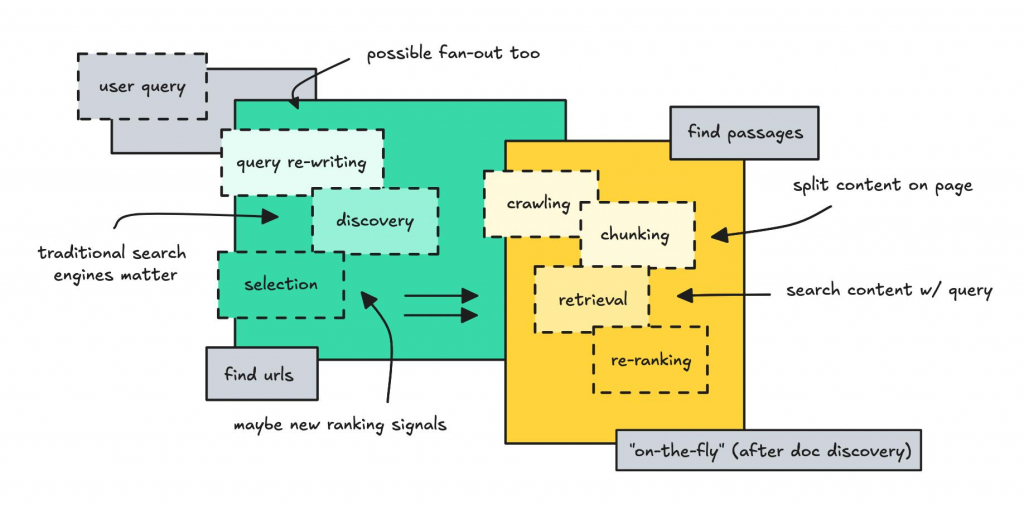
AI systems prefer content that is easy to retrieve.
That means using:
- H1, H2, H3 structure
- short paragraphs
- bullet points
- definitions
- FAQs
- comparison tables
- clear summaries
- supporting examples
Walls of text perform poorly.
Readable structure improves both SEO and GEO.
Good formatting is no longer optional.
It directly affects visibility.
Personal Insight
When I started working on my own website content, I noticed something interesting.
The blogs that performed best were not the ones with the most keywords.
They were the ones that answered questions clearly.
Once I started focusing on structure, helpful content, and authority instead of just ranking tricks, everything looked stronger.
Even before traffic improved, the content felt more trustworthy.
That changed how I think about SEO.
Now I focus less on gaming search engines and more on building content people actually trust.
That approach supports both SEO and GEO naturally.
Final Thoughts
Traditional SEO is still essential.
But GEO is becoming just as important.
Businesses that combine both will dominate future search visibility.
That means:
- ranking in search engines
- appearing in AI-generated answers
- building trust before clicks happen
- becoming the authority in your niche
The goal is not just traffic anymore.
It is visibility, trust, and long-term authority.
That is where real growth happens.
FAQ
Is GEO replacing traditional SEO?
No.
GEO supports SEO.
Traditional SEO helps rankings.
GEO helps AI visibility.
Businesses need both together.
Can a business rank well without GEO?
Yes, but it becomes harder over time.
As AI search grows, businesses without GEO strategy may lose visibility in future search behavior.
What is the biggest GEO ranking factor?
Trust.
AI systems prioritize helpful, reliable, well-structured content that demonstrates authority and expertise.
Does long-form content help GEO?
Yes.
Long-form content often performs better because it provides depth, supporting evidence, and stronger FAQ opportunities for AI retrieval.
What tools help with GEO strategy?
Helpful tools include:
- Google Search Console
- Google Analytics
- Semrush
- Ahrefs
- Moz
- Search Engine Journal
- Google Search Central
These help improve both SEO and GEO visibility.
Trusted References and Supporting Sources
Google Search Central explains that helpful content should prioritize people-first writing and real usefulness over content created only for rankings. This supports both SEO and GEO because users and AI tools both reward trusted content.
Semrush and Ahrefs consistently highlight that modern rankings depend heavily on:
- search intent matching
- internal linking
- content depth
- semantic relevance
- structured content
- authority building
Moz also explains that modern SEO is strongly tied to user experience and search satisfaction, not outdated keyword stuffing.
As AI search grows, GEO becomes the natural extension of these same trust principles.
For future content strategy, trusted resources include:
- Google Search Central
- Google Analytics
- Google Search Console
- Semrush
- Ahrefs
- Moz
- Search Engine Journal
- HubSpot
- Gartner
- McKinsey
Using these references strengthens both rankings and academic credibility while helping businesses create stronger authority-based content.
Leave a Reply